

For an island utility like Marshalls Energy Company (MEC), every kilowatt-hour matters. Electricity generation in the Republic of the Marshall Islands depends heavily on imported fuel, complex distribution infrastructure, and equipment that must operate reliably in a harsh marine environment. In this context, technical efficiency and revenue protection are not abstract goals — they are essential to keeping power affordable, stable, and sustainable.
That is why MEC’s implementation of the Energy Balance Data Analyzer (EBDA) marks a major breakthrough in how the company manages its grid.
The EBDA is a high-fidelity diagnostic platform engineered specifically for MEC’s network. It provides total transparency over the entire electricity system by synchronizing data from the high-voltage (HV) side of the grid — including substations and feeders — with the low-voltage (LV) distribution system and individual customer meters. In practical terms, it allows MEC to track and reconcile every unit of energy from the moment it is generated to the moment it is consumed.
This is not simply another reporting tool. It is a closed-loop audit of the grid.
From Reactive Maintenance to Intelligence-Led Management
Historically, utilities often operate reactively. A transformer fails. A feeder trips. Revenue drops. Complaints increase. Investigations begin after a problem becomes visible. The EBDA changes that model entirely.
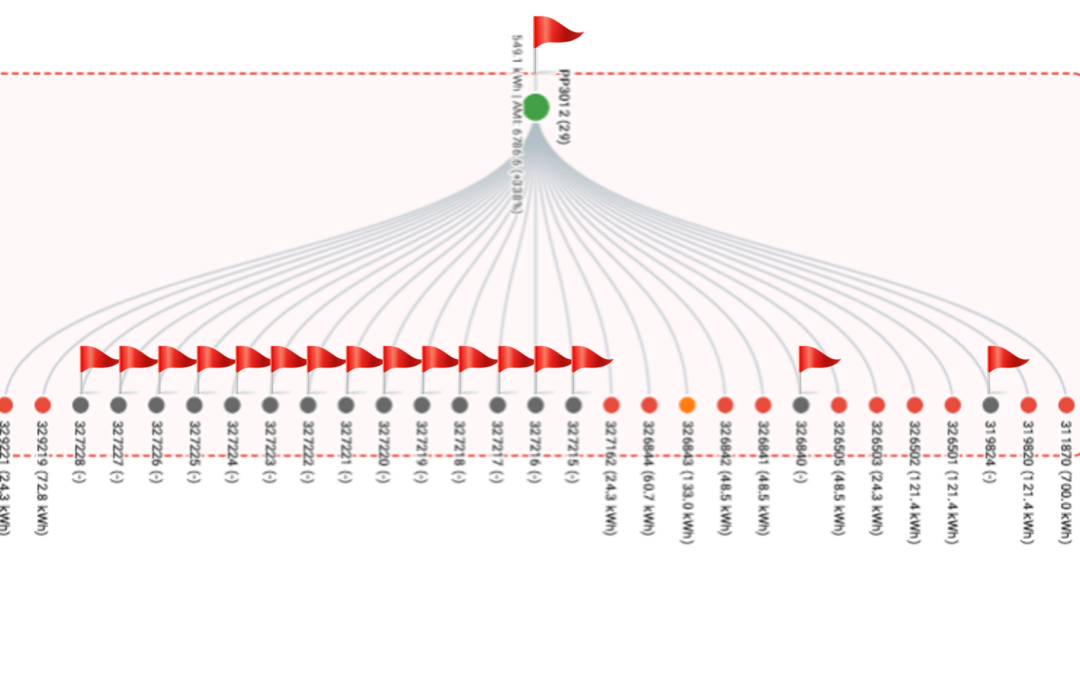
By comparing energy generated at the feeder level with the energy measured at each downstream distribution transformer — and then comparing that to the sum of all connected customer meters — the system creates a digital “balance sheet” for every neighborhood. If there is a discrepancy between what leaves a transformer and what is billed to customers, the EBDA flags it immediately.
This means MEC can now detect issues before they escalate into outages, revenue losses, or system failures. Instead of broad inspections across entire districts, teams can be deployed precisely where anomalies are detected. The result is a smarter, more efficient utility — one that uses data as its first line of defense.
Precision Revenue Protection
One of the most powerful applications of the EBDA is in identifying non-technical losses — energy that is generated and distributed but not properly billed.
Non-technical losses may result from meter tampering, illegal hooks, bypassed meters, or unregistered connections. In the past, detecting these required time-consuming patrols and manual inspections, often with low success rates. With EBDA, revenue protection becomes intelligence-driven.
The system automatically compares total transformer output against the sum of all connected Advanced Metering Infrastructure (AMI) meters. If the energy measured at the transformer significantly exceeds what is recorded by customers, the discrepancy is highlighted. High-loss transformers are flagged as “high-risk zones,” and specific customer connections can be reviewed in detail.
This transforms field operations. Instead of inspecting entire areas randomly, compliance teams are directed to precise coordinates with a significantly higher probability of detecting irregularities. That improves the hit rate, protects revenue, and reinforces fairness across the network — ensuring that paying customers are not subsidizing illegal consumption.
High-Voltage Integrity and Grid Security
Energy theft does not always occur at the meter level. In some cases, illegal transformer connections can be made directly to high-voltage lines, bypassing the formal distribution network entirely.
The EBDA closes this blind spot.
By monitoring discrepancies between substation output and registered transformer inputs, the system can detect anomalies that suggest unauthorized connections on the HV side of the grid. If energy leaves the substation but does not appear at any authorized distribution transformer, that inconsistency triggers investigation.
For a small island system, this level of HV monitoring is a significant advancement. It protects infrastructure integrity, improves system security, and ensures that large-scale losses do not go unnoticed.
Smarter Transformer Management and Engineering Insights
Beyond revenue protection, the EBDA provides valuable engineering intelligence.
Distribution transformers are the backbone of the local grid. If overloaded, they overheat, degrade faster, and increase the risk of localized blackouts. If significantly underutilized, they generate “iron losses” — standing energy losses that occur even when customer demand is low.
The EBDA identifies both conditions.
Overloaded transformers can be detected when customer clustering exceeds the transformer’s kVA rating. This allows MEC to proactively rebalance loads, split circuits, or upgrade equipment before failures occur.
Underutilized transformers are also flagged. These represent opportunities to optimize asset deployment, consolidate loads, and reduce standing losses. In a fuel-dependent system, even small efficiency gains translate into meaningful cost savings over time.
By providing this level of visibility, the EBDA supports long-term grid re-engineering. It enables planning based on data rather than assumptions.
Transparency at Every Level
One of the most striking features of the EBDA is its visualization capability. Energy flow is mapped clearly from feeder to transformer to individual customer meters. Engineers can see, at a glance, the aggregated energy at each level and how it compares to downstream measurements.
This transparency fosters accountability within the system itself. When every kilowatt-hour can be traced and reconciled, inefficiencies cannot hide. Technical losses can be quantified. Non-technical losses can be isolated. System performance can be measured objectively.
For MEC, this represents a new era of operational clarity.
Why This Matters for the Marshall Islands
In the Republic of the Marshall Islands, electricity generation is closely tied to fuel imports and logistical constraints. Every unnecessary loss increases operational cost. Every transformer failure disrupts communities. Every unbilled kilowatt-hour affects revenue stability.
The EBDA directly addresses these realities.
By minimizing revenue leakage, optimizing transformer performance, detecting illegal tapping, and enabling proactive maintenance, the system strengthens MEC’s financial sustainability and operational resilience. It ensures that electricity delivered is electricity accounted for.
In doing so, it protects customers, supports long-term infrastructure investment, and aligns with MEC’s broader modernization efforts.
Building a Smarter Utility for the Future
The Energy Balance Data Analyzer is more than a technological upgrade — it is a strategic shift in how MEC manages its grid.
It moves the company from reactive problem-solving to predictive oversight.
From manual inspections to data-driven targeting.
From partial visibility to full-network transparency.
As MEC continues to modernize and strengthen its infrastructure, the EBDA stands as a cornerstone of that transformation — powering not just homes and businesses, but smarter decision-making, stronger accountability, and a more resilient energy future for the Marshall Islands.